Key highlights
- Industrial utility operators including Steamhouse India are deploying fresh capital (~₹114 crore) to expand shared green steam capacity serving Dahej GIDC plants.
- GPCB and MoEFCC frameworks emphasise Zero Liquid Discharge (ZLD), CETP integration, deep-sea effluent discharge, and continuous emission monitoring.
- Growing plant procurement across boilers, heat recovery, RO/MEE membranes, scrubbers, gas detectors, and energy-efficient cooling towers.
As chemical and pharmaceutical manufacturing density rises across Dahej GIDC and Ankleshwar, shared industrial utilities and environmental compliance infrastructure have become central to every new plant blueprint.
Community steam infrastructure providers such as Steamhouse India have earmarked substantial growth capital (~₹114 crore from capital raises) to expand cleaner industrial steam generation directly serving process plants in Dahej GIDC — allowing chemical estates to reduce individual boiler footprints while improving thermal reliability.
At the same time, stringent Gujarat Pollution Control Board (GPCB) and MoEFCC standards are accelerating plant-level adoption of Zero Liquid Discharge (ZLD) systems, multi-effect evaporators (MEE), advanced membrane filtration, automated gas-leak detection, and deep-sea effluent monitoring.
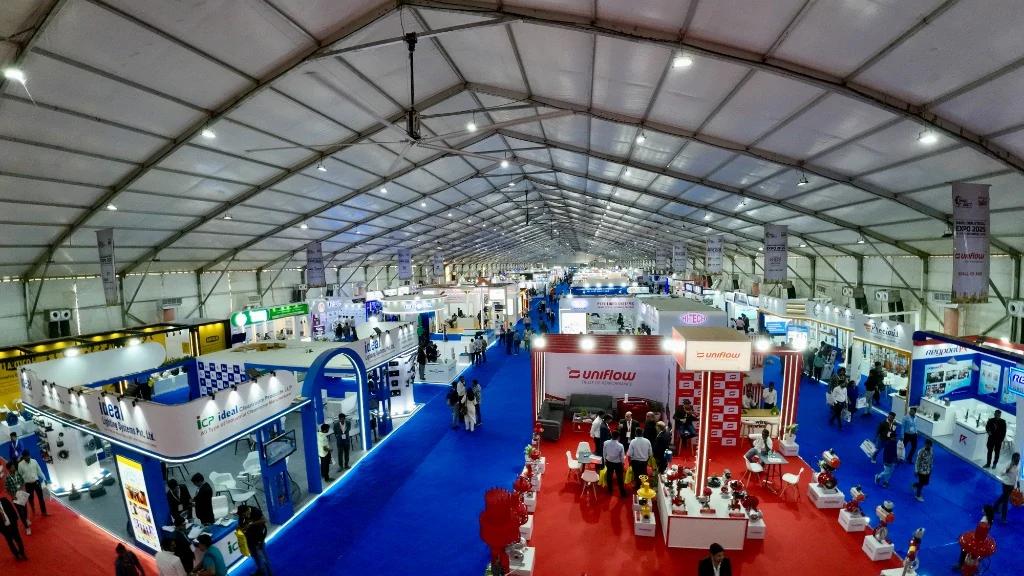
Water treatment, HVAC, cooling tower, electrical switchgear (IEC-61439), and industrial safety suppliers will find an active, compliance-driven buyer base across Dahej Industrial Expo 2026’s exhibition floor and Seminar Hall technical tracks.